Ethiopian celebrations are rich in tradition, warmth and flavour. From weddings and the melse that follows to christenings, graduations, holidays such as Enkutatash and Meskel, and milestone birthdays, Ethiopian families gather in large numbers to share food, music and the beloved coffee ceremony. Planning an Ethiopian wedding in Calgary or a family event calls for a venue with space for many guests and access to Ethiopian catering in Calgary that honours the cuisine. This guide explains how to plan an Ethiopian celebration in the city, from choosing the room to the menu, music and cultural touches that make the day special.
Divya Samaroha Events Centre includes Ethiopian cuisine among its in-house catering options, alongside Nigerian, Mediterranean, Indian, Pakistani, Afghani, Continental and Italian menus. With rooms from 30 to 600 guests, including the grand Lavanya hall, and a Northeast Calgary location near Calgary International Airport, it gives Ethiopian and Eritrean families a convenient place to host celebrations of every size.
Ethiopian Wedding Traditions
Ethiopian weddings vary by region, religion and family, but many share common elements. For Orthodox Christian families, the religious ceremony often takes place at church, followed by a reception with family and friends. The groom and his groomsmen may arrive at the bride’s home with singing and dancing before the ceremony. After the wedding, many families celebrate the melse, a second celebration where the couple often wear traditional clothing, such as habesha kemis and embroidered capes. Muslim Ethiopian families have their own customs, including the nikah and celebratory gatherings.
Because weddings often involve more than one event, families benefit from a venue that offers several room sizes. A large reception might suit the Lavanya hall, while a melse or engagement party could be held in Amnaya or Divya Satvic.
Choosing the Right Room
Ethiopian weddings commonly welcome large guest lists, with extended family, church members and community friends attending. The Lavanya hall’s four combinable sections accommodate 250 to 600 guests, with room for round tables, a stage for the couple, a dance floor and buffet stations. For smaller celebrations, Amnaya A and B host 100 to 200, Divya Satvic hosts 50 to 150, and Anaya A and B host 30 to 80, ideal for christenings and family gatherings.
The Ethiopian Menu
Ethiopian food is designed for sharing. Injera, the soft, tangy flatbread made from teff, serves as both plate and utensil. Families often serve doro wat, the slow-cooked chicken stew with berbere spice and hard-boiled eggs, along with tibs, key wat, and kitfo. Vegetarian dishes such as misir wat (red lentils), shiro, gomen (collard greens), atkilt and kik alicha are essential, especially during Orthodox fasting periods when many guests follow a plant-based diet. Because menus vary, review the current Ethiopian menu with the events team, ask about specific dishes and arrange a tasting so the food matches your family’s expectations.
Serving style for Ethiopian events
Ethiopian meals are traditionally served on large communal platters, with dishes arranged on injera for guests to share. At large receptions, many families use a buffet with injera and stews served on individual plates, which keeps lines moving. Discuss with the catering team how to balance tradition and efficiency for your guest count, and plan enough injera for everyone.
The Coffee Ceremony
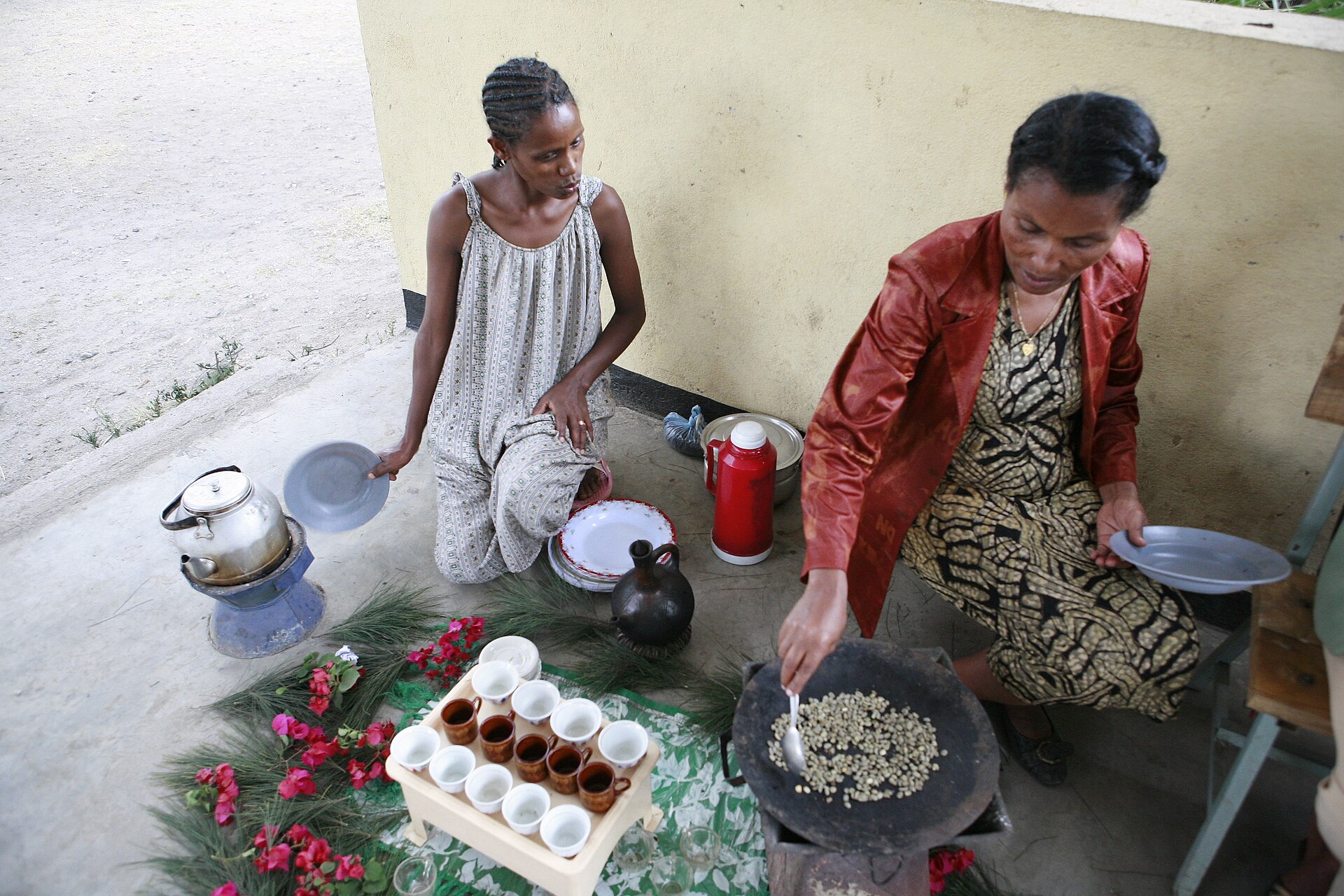
No Ethiopian celebration feels complete without the jebena buna, the traditional coffee ceremony. Green coffee beans are roasted, ground and brewed in a clay jebena, often accompanied by incense and popcorn. The ceremony is a symbol of hospitality and community. Many families include a coffee ceremony station at weddings, christenings and holiday gatherings. Plan a dedicated corner with seating, and confirm with the venue any requirements for roasting and incense in the room.
Music and Dance
Ethiopian music brings everyone to the dance floor. Eskista, the energetic shoulder dance, is a highlight at weddings, and guests of all ages join in. A DJ familiar with Amharic, Tigrinya, Oromo and contemporary Ethiopian music, or a live band with a krar and kebero drum, sets the mood. Plan the couple’s entrance with traditional music and leave plenty of time for dancing.
Décor and Traditional Elements
Décor for Ethiopian celebrations often features gold, white and green, traditional woven baskets (mesob), handwoven fabrics and floral arrangements. A decorated stage for the couple and a photo area with traditional textiles make beautiful backdrops. Hall décor services can help you blend cultural elements with elegant reception styling.
Other Ethiopian Celebrations Through the Year
Weddings are not the only occasions that bring Ethiopian families together. Christenings (kristina) welcome babies into the church community with a family meal. Enkutatash, the Ethiopian New Year in September, and Meskel, the finding of the True Cross, are joyful community festivals. Genna (Christmas) and Fasika (Easter) mark the end of long fasting periods with feasts of doro wat and other celebratory dishes, while Eid celebrations are important for Muslim Ethiopian families. Graduations and milestone birthdays are also popular reasons to gather. Smaller rooms such as Anaya and Divya Satvic suit family-sized events, while community associations can use the larger halls for holiday celebrations, cultural nights and fundraising dinners. Planning these events follows the same principles: choose a room that fits, plan a menu that suits the occasion and fasting calendar, and include the music and coffee traditions guests love.
Ethiopian Celebration Planning Timeline
- Twelve months out: set dates for the wedding and melse and book the rooms.
- Nine months out: book DJ or band, photographer and décor.
- Six months out: review the Ethiopian menu and arrange a tasting.
- Four months out: send invitations with event details.
- Two months out: plan the coffee ceremony and finalise the programme.
- Three weeks out: confirm guest numbers and dietary needs, including fasting.
- Wedding week: review the run sheet with the venue team.
Welcoming Family From Abroad
Ethiopian weddings often bring relatives from the United States, Europe and Ethiopia. Proximity to YYC simplifies travel, and rooms at the sister property, Divya Sutra Calgary Hotel, offer group rates for six or more rooms and free breakfast for direct bookings.
Where to Host Your Ethiopian Celebration
Families looking for a banquet hall in Calgary with Ethiopian cuisine available in-house will find flexible rooms and event support at Divya Samaroha Events Centre. It is a welcoming wedding venue in Calgary for Ethiopian and East African families.
To review Ethiopian and other cuisine options, visit the catering services page.
Frequently Asked Questions
Is Ethiopian food available at the venue?
Yes. Ethiopian cuisine is one of the in-house catering options. Review the current menu and arrange a tasting with the events team.
Can vegetarian fasting dishes be served?
Ethiopian cuisine includes many plant-based dishes. Discuss fasting needs with the events team when planning your menu.
How many guests can an Ethiopian wedding host?
The Lavanya hall accommodates 250 to 600 guests across four combinable sections.
Can we include a coffee ceremony?
Many families include one. Confirm any requirements for roasting and incense with the venue in advance.
Final Thoughts
Ethiopian celebrations bring together faith, family, music and a cuisine made for sharing. Choose the right room, plan a menu that honours tradition and include cultural touches like the coffee ceremony and eskista. Divya Samaroha Events Centre helps Calgary’s Ethiopian families celebrate with warmth and hospitality.